Saturday, January 9, 2016

JUNKANOO, THE GREAT FESTIVAL OF THE BAHAMAS

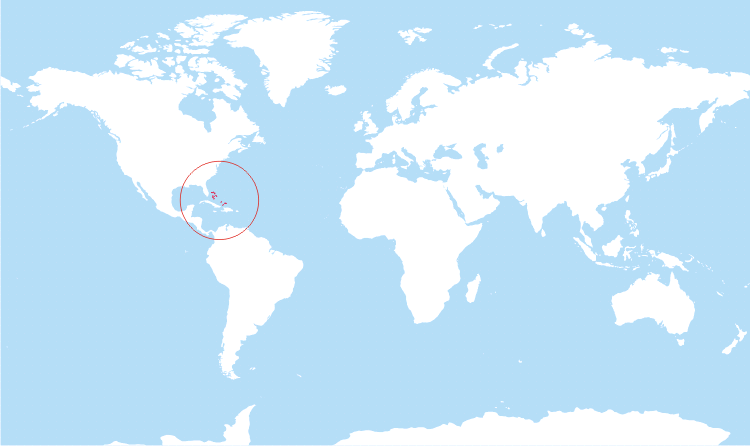
World map Bahamas highlighted
The music of the Bahamas is especially related to Junkanoo, a kind of street carnival that occurs in the early morning hours across many towns of the Bahamas on Boxing Day (December 26) and New Year’s Day (January 1) too. However, it is in downtown Nassau where the largest celebration takes place.

   The origin of the name given to this celebration has been disputed, although, the idea of this name has its origin in an African slave called John Canoe or that it comes from the French phrase gens inconnus (unknown or masked people) are the most popular ones. Junkanoo may be the closest link to African heritage since it has not changed over the years. It is believed that this festival started during 16th and 17th. Slaves were given a special holiday during Christmas time so they could leave the plantation and celebrate their freedom with their families.

Friday, January 8, 2016

INFLUENTIAL PERSONALITIES OF SOUTH AFRICA


The Republic of South Africa is a country situated in the very south of the African continent. It is formed by a multi-ethnic society with plenty of cultures, religions and a great variety of languages, among which 11 as official (with English ranked as the 4th most used, especially in public and commercial life). This country is well known for its struggle against racism, mostly during the apartheid system. The apartheid system contained laws of racial segregation that sought the dominance of the white minority over the black majority. This generated a contraposition by the African National Congress and many anti-apartheid activists, among whom we can find:

NELSON MANDELA


 One of the most important South African figures, Nelson Rolihlahla Mandela was born on 18 July 1918 in Mvezo. Member of a royal family, but only he received formal education. He attended Fort Hare University, the only black university in South Africa  at the time, but he was expelled after a year due to his political activism. He spent some time working as an apprentice and later, in 1952, he started the first black legal firm with his friend Oliver Tambo, called Mandela and Tambo. On August 5th in 1962, he was arrested, becoming the most famous political prisoner. He got out of prison in 1990, became president of South Africa in 1994 and started creating the non-racial country he'd always dreamed of.

ARCHBISHOP DESMOND TUTU


 Emeritus Desmond Tutu was born on 7 October 1931 in Klerksdorp. A humanitarian figure of humble origins, he had to abandon his studies in 1953 because of the Bantu Education Act. He joined the Anglican Church and and helped in the fight against the apartheid system. He made history in 1975 for becoming the first Anglican Dean of Johannesburg and again in 1986 when he was appointed Archbishop of Cape Town. He won a Nobel Peace Prize in 1984, but continued fighting against racism and injustice.

NADINE GORDIMER


 Born on 20 November 1923, she was a South African writer and political activist. She came from a white middle-class family of Jewish origins. She witnessed first-hand the oppressive apartheid system, against which she fought vehemently. She used this experiences in her novels, which back then were banned in South Africa, but widely read around the rest of the world. She won many awards such as the Nobel Prize for Literature in 1991, becoming the first South African to win this celebrated award. From 1994 onwards, she also became an activist in the HIV/AIDS movement.


Sources:
Monday, January 4, 2016

MULTICULTURALISM IN CANADA

Canada is a very progressive, diverse and multicultural country. By "multicultural" we mean that there is an equal celebration of different racial, religious and cultural backgrounds. This is possible thanks to the importance of immigration in Canada.


Thursday, December 31, 2015

RELIGION IN SINGAPORE

s14
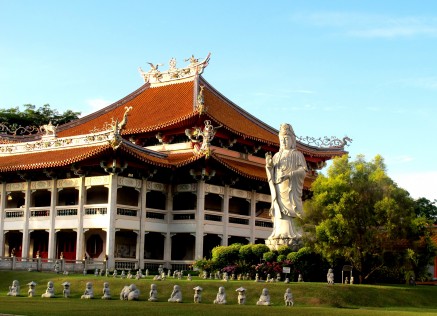
Singapore or Republic of Singapore is a sovereign country and island placed in Southeast Asia. Due to its diversity, many religions are practiced in this country. The five major religions that coexist in Singapore are: Buddhism, Islam, followed by Christianity, Taoism and Hinduism. Although these are the most practiced religions, there are also others but they are practiced by a lower percentage of the population.

   Buddhism is practiced by more than three-fifths of Singapore's population in its three main strands: Theravada, Mahayana, and Vajrayana. The teachings practiced by Buddhists are: Morality, Wisdom and Concentration. The art of Fengshui, which consists of evoking positive energy, is a great point of this religion.

IMG_0450
Kong Meng San Phor Kar See Monastery
(Chinese Mahayana Buddhist temple in Singapore)

Sunday, December 27, 2015

ST. PATRICK'S DAY

Every year on 17 March, St. Patrick’s Day is celebrated in many parts of the world but, especially, by Irish communities. This is a cultural and religious celebration that honors the death date of St. Patrick, the patron saint of Ireland.

   At the beginning of the 17th century, St. Patrick’s Day was made an official Christian feast day. This date commemorates the arrival of Christianity in Ireland introduced by Saint Patrick. However, this is also a celebration of the heritage and culture of the Irish.

Monday, December 14, 2015

KENYA


   Hi everyone! It’s time to talk about Kenya. (I hardly recommend you its website about tourism, it’s very nice!). Kenya has two official languages: English and Swahili despite the fact that there are many languages which are talked in Kenya.  

   Here I leave you some interesting things about Kenya and its society:
  v     Kenya was known as British East Africa, but it became independent in 1963 and in 1964 it became a Republic.
  v  On 12 December, it is celebrated “Jamhuri Day” (jamhuri means “republic” in Swahili) which commemorates the day that the country got the independence.
  v  It was named Kenya, which means “white mountain”, because of the Mount Kenya which is a traditional place of the country and the second-highest mountain of Africa.
  v  The Kikuyu tribe is the one that has more population (20%) between the 70 tribes which inhabit Kenya.
  v  Kenyan’s life expectancy is of 52 years but it is thought that people use to die when they get on about 47 because of AIDS.
  v  Kenya’s athletes are known worldwide because of their good ability in middle-distance running, of which Kevin Rudisha is the current Olympic champion.
                                                                               Kevin Rudisha
  v  When a woman has a child, they are called “mum” plus the name of her first child.
  v  Coffee is an export product, they don’t consume it. They usually drink tea and beer despite coffee is the biggest income generator.                                           
       Woman collecting coffee.

  v  After coffee, as you can see in the web site of Kenya, tourism has a great influence in the economy of the country.
  v   Kenya has only two seasons. There is one dry and another completely rainy.
  v  The great majority of the population of Kenya, they are Protestants.
  v  Althoug the 90% of the population is black, there is also white population and they are Kenyans born there too.


         I end with this amazing photograph taken from the official page of tourism in Kenya. Hope you have enjoied it.


Thursday, November 12, 2015

LIFE IN NIGERIA


   Hi everyone! Today I'm going to talk about Nigeria (It has no web site). You know that Nigeria is the most crowded country of Africa as well as one of the most crowded of the world. You should be amazed to know that more than 500 languages are spoken in Nigeria because of those sorts of people who belong to different tribes. Between these languages, there are four regional languages recognized as official. These are Yoruba, Hausa, Igbo and Fula. But as you already had thought, if any of them have different languages, how they could communicate with each other? Well, this is the reason why English is the official language! Here I leave you some important aspects about their customs:

   Food is very important in their culture. Whenever they have guests, they offer them food because it has a fundamental role in celebrations. It is a curious fact for occidental people that instead of using utensils for eating, Nigerians use their hands. Although it is considered a rudeness to eat with the left hand. They usually eat foods raised by themselves as manioc, yam and corn. When they have to cook it, they usually make a mush made with corn, millet and sorghum, or ragouts of meat and vegetables.

(From left to right: manioc, yam and corn.)


   Nigerian people has a society full of sexism. Man is considered superior than woman to the point that a man can hit a woman providing the injury don’t be permanent. Men, they are farmers and they also go to the market to sell their products. Women, on the other hand, should work and provide money to their family. Although they cannot have a well-paid job or work in a job considered “superior”.

(One of the hardest jobs women bear.)                             

   Almost every ethnic group allowed more than one wife to only one man. The ceremony takes place at the bride’s home and she has a price as some kind of compensation. It is usually made by money or cattle. The great majority of women get married when they are too young, and they often do it with men who are too old.


   There are some interesting facts about them which probably look strange for us. Did you know that it is very common for them that two men walk hand in hand? It is to a certain point unusual for us, but they only think about that as two friends walking and having an enjoyable conversation. Another aspect is that they haven’t the same concept of time than us. For this reason they are not punctual people, sometimes they suffer great delays.